If you’re sourcing a PCB for a new product, one of the first decisions you’ll make is the layer count: single-sided, double-sided, or multilayer. Each option has a different cost, performance ceiling, and manufacturing turnaround. Picking the wrong one can mean overpaying for complexity you don’t need — or hitting a performance wall on a board that’s too simple. This guide breaks down the differences so you can choose with confidence.
What Is a Single-Layer PCB?
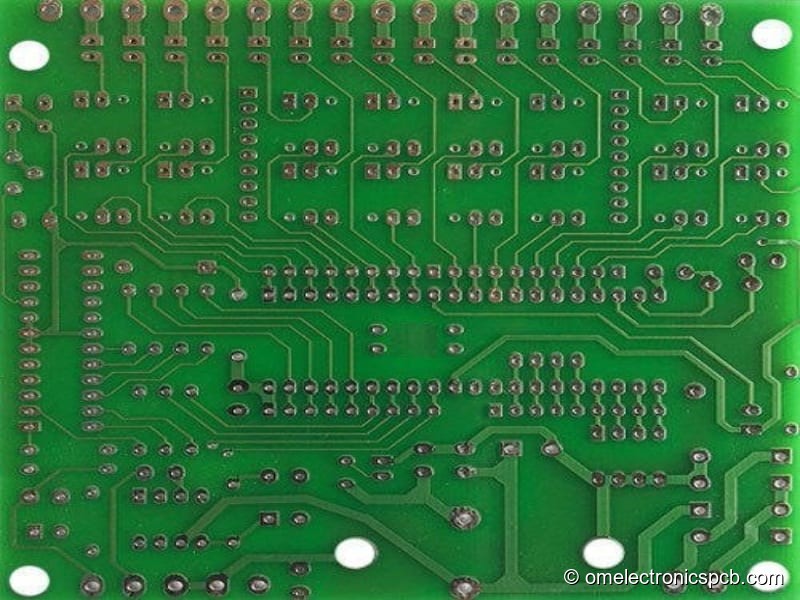
A single-sided (single-layer) PCB has one layer of copper conductive material on a single base material, with components on one side and the conductive copper circuit on the other. It’s the simplest and most affordable type of PCB fabrication available.
- Best for: simple electronics — calculators, LED drivers, power supplies, basic sensors
- Cost: lowest of the three
- Turnaround: fastest to manufacture
- Limitation: not suitable for dense or high-speed circuits
What Is a Double-Layer PCB?
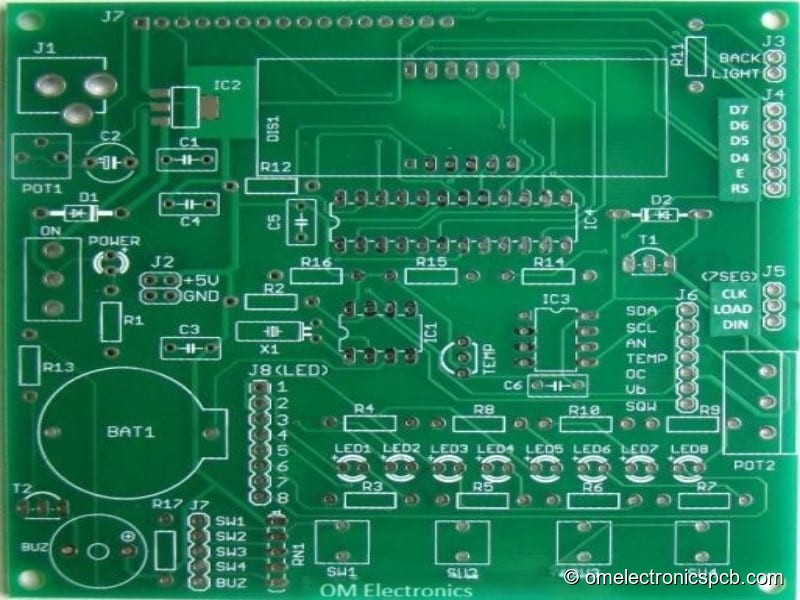
A double-sided PCB has copper layers on both sides of the board, connected by plated through-holes or vias. This allows components and traces on both faces, roughly doubling the routing density without adding much cost.
- Best for: consumer electronics, automotive control units, industrial controllers, power converters
- Cost: moderate — a small step up from single-layer
- Turnaround: still fast, slightly longer than single-layer
- Limitation: EMI and signal integrity get harder to manage at higher frequencies
What Is a Multilayer PCB?
A multilayer PCB stacks three or more conductive copper layers, separated by insulating material and laminated together under heat and pressure. Internal layers are typically used for power and ground planes, which improves signal integrity and lets you pack far more components into a smaller footprint. See our multilayer PCB manufacturing services for build specs and capabilities.
- Best for: telecom equipment, medical devices, aerospace/defense, high-speed computing, IoT modules
- Cost: highest of the three — more material, more process steps
- Turnaround: longer lead time due to lamination and layer alignment
- Advantage: best signal integrity, EMI shielding, and component density
Side-by-Side Comparison
| Factor | Single-Layer | Double-Layer | Multilayer |
|---|---|---|---|
| Cost | $ | $$ | $$$ |
| Component Density | Low | Medium | High |
| Signal Integrity | Basic | Good | Excellent |
| Lead Time | Fastest | Fast | Longer |
| Typical Use | Simple devices | Consumer/Industrial | Telecom/Medical/Aerospace |
How to Decide Which One You Need
Ask yourself three questions:
- How dense is my circuit? Few components and simple routing → single-layer. Moderate complexity → double-layer. Dense, high-speed, or RF circuits → multilayer.
- What’s my budget and volume? Single-layer keeps unit cost down for high-volume simple products. Multilayer costs more per board but can reduce overall product size and assembly cost.
- What’s my timeline? Single and double-layer boards have shorter PCB prototyping and production lead times than multilayer builds.
If you’re still unsure, our engineering team at OM Electronics can review your schematic and recommend the right layer count before you commit to fabrication — with no minimum order quantity on any layer type.
Frequently Asked Questions
Can a single-layer PCB be upgraded to double-layer later?
No — the layer count is fixed during fabrication. If you expect your design to grow in complexity, it’s often cheaper long-term to start with double-layer.
Is multilayer PCB always better?
Not necessarily. Multilayer adds cost and lead time that aren’t justified for simple circuits. Match the layer count to your actual signal and density requirements.
How many layers can a multilayer PCB have?
Multilayer PCBs commonly range from 4 to 16+ layers depending on design complexity; our facility supports a wide range of multilayer configurations.
Key Takeaways
- Single-layer PCBs are the cheapest and fastest option for simple, low-density circuits.
- Double-layer PCBs balance cost and performance for most consumer and industrial products.
- Multilayer PCBs deliver the best signal integrity and density for complex, high-speed, or mission-critical electronics.
- Match the layer count to your circuit’s actual complexity and budget — not the other way around.
Conclusion
Choosing between single, double, and multilayer PCBs comes down to matching board complexity, budget, and timeline to your project’s real requirements. OM Electronics manufactures all three types in-house in Punjab, India, with 25+ years of experience and no minimum order quantity. Get in touch with our team for a free quote on your next PCB project.